Recognizing and even distinguishing metal under plastic
In industrial manufacturing processes, metallic components are often deliberately hidden under protective layers. Plastic sheathing is used for insulation, corrosion protection or mechanical stabilisation. However, this results in a challenging task for process monitoring: metal should be detected even though it is invisibly under a plastic layer – and ideally it should even be possible to distinguish between different types of metal.
Process monitoring of sheathed metal pipes
Practical example 1: Fasteners in coated steel tubes
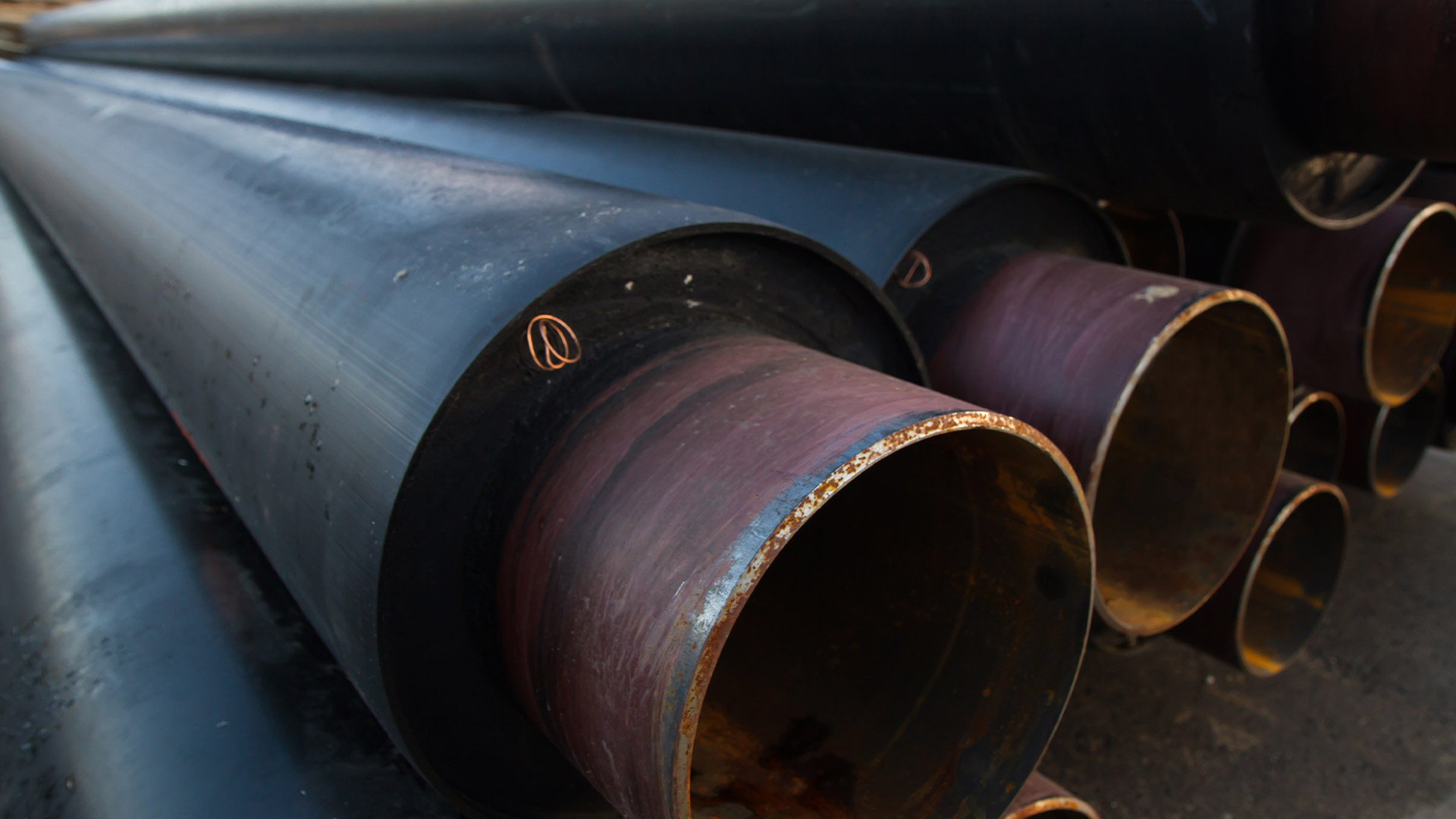
After welding steel pipes, the seam is additionally protected. To do this, an aluminium fastener is applied directly to the weld point. Aluminium is non-ferromagnetic and complements protection against external influences. The complete pipe is then given a plastic coating made of PP or PA several millimeters thick. The aluminum component is thus completely concealed below the surface.
Nevertheless, it must be checked during the ongoing process whether this fastener is present and in the correct position. At the same time, the steel pipe itself must not be considered a “signal”. The solution must therefore ignore plastic, detect metal under the coating and be able to distinguish between steel and aluminum – and do so under real production conditions with continuous movement.
Why classic solutions reach their limits here
Optical systems are out of the question because the plastic layer completely covers the metal. Although many sensor systems react fundamentally to metal, they do not distinguish between ferromagnetic and non-ferromagnetic materials. This results in false alarms or unclear signals because both the steel tube and the aluminum component are detected.
The solution: selective inductive sensor technology
Inductive sensor with selective behavior for targeted metal detection
This is where an inductive sensor with selective behavior comes into play. This type of sensor is designed to react specifically to non-ferromagnetic metals such as aluminum, while steel or iron remain largely unaffected. The plastic jacket does not play a role in the measuring principle.
The sensor is mounted above the pipe and monitors the process without contact. Even in the event of vibrations or slight position deviations in the conveying process, the detection remains stable.
Practical example 2: Detecting aluminum foil in conveying processes
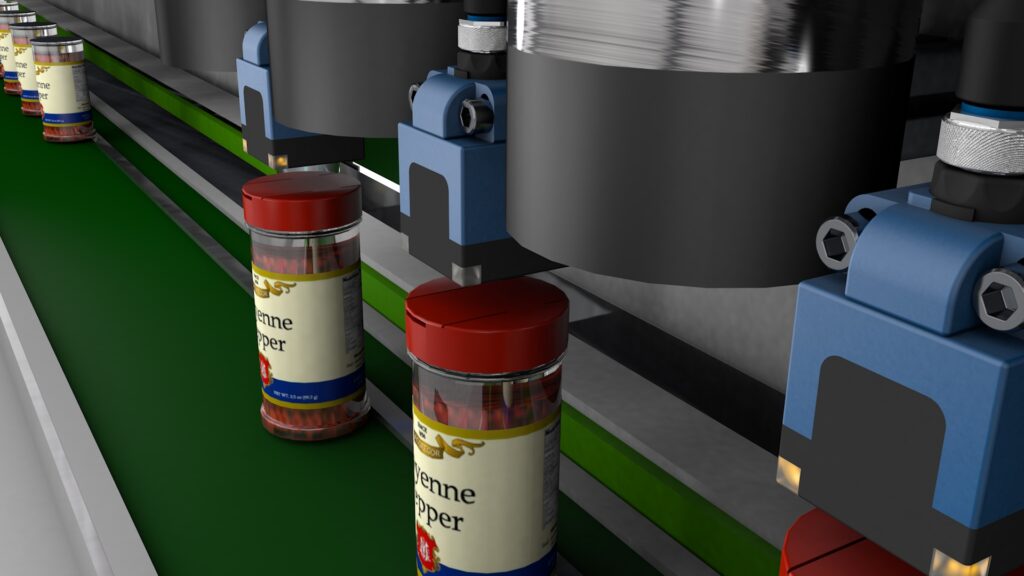
The same principle can also be found in packaging and conveyor systems. Thin aluminum foils are often processed or transported there – for example, as a barrier or protective layer. These films are very thin, highly reflective and often difficult for optical systems to detect. At the same time, there are other metal parts in the area, such as steel, which should not be considered a signal.
Inductive sensors with selective behavior solve this task particularly elegantly. They react specifically to non-ferromagnetic metals such as aluminum and ignore ferromagnetic components. This means that even a thin aluminum foil can be reliably detected in the process without the need for complex image processing or additional evaluation. The underlying technology corresponds exactly to the principle that is also used for coated steel pipes – only in a different form of application.
Aluminum foil detection by inductive sensors in the packaging line
Whether it’s an aluminium fastener under plastic or thin aluminium foil in the conveying process – the steel environment is practically “faded out” while the desired material is reliably detected. This creates a robust solution that can be integrated comparatively easily into existing systems and offers a high level of process reliability.
Transferable to many applications
Such requirements are by no means limited to pipe production or packaging technology. Wherever metal is hidden under plastic or certain types of metal have to be specifically detected, this technology plays to its strengths. It enables reliable process monitoring even when the crucial component is invisible to the eye.
Conclusion
The application shows that modern inductive sensor technology can do much more than detect the presence of metal. Selective behaviour enables targeted material differentiation – even under plastic layers, in thin films and in moving processes. This creates transparency in areas where classic systems reach their limits.
To provide you with an optimal experience, we use technologies such as cookies to store and/or access device information. If you consent to these technologies, we may process data such as browsing behaviour or unique IDs on this website. If you do not give your consent or withdraw it, certain features and functions may be affected.
Functional
Always active
Technical storage or access is strictly necessary for the legitimate purpose of enabling the use of a specific service explicitly requested by the subscriber or user, or for the sole purpose of carrying out the transmission of a communication over an electronic communications network.
Preferences
Technical storage or access is necessary for the legitimate purpose of storing preferences that have not been requested by the subscriber or user.
Statistiken
Technical storage or access for statistical purposes only.Technical storage or access used exclusively for anonymous statistical purposes. Without a subpoena, the voluntary consent of your internet service provider, or additional records from third parties, the information stored or accessed for this purpose cannot, as a rule, be used to identify you.
Marketing
Technical storage or access is required to create user profiles, send advertising or track users on a website or across multiple websites for similar marketing purposes.