
Can I detect an 18mm object at a distance of 4cm with a regular reflex sensor?

A user from the automation technology sector approached wenglor with this question. His task: Metal components with a diameter of around 18 millimetres needed to be reliably detected in an ejection control system. However, the installation space was so limited that the sensor had to be mounted directly in front of the object. This is precisely where many standard solutions reach their limits.

Retro-reflex sensor for transparent objects in production
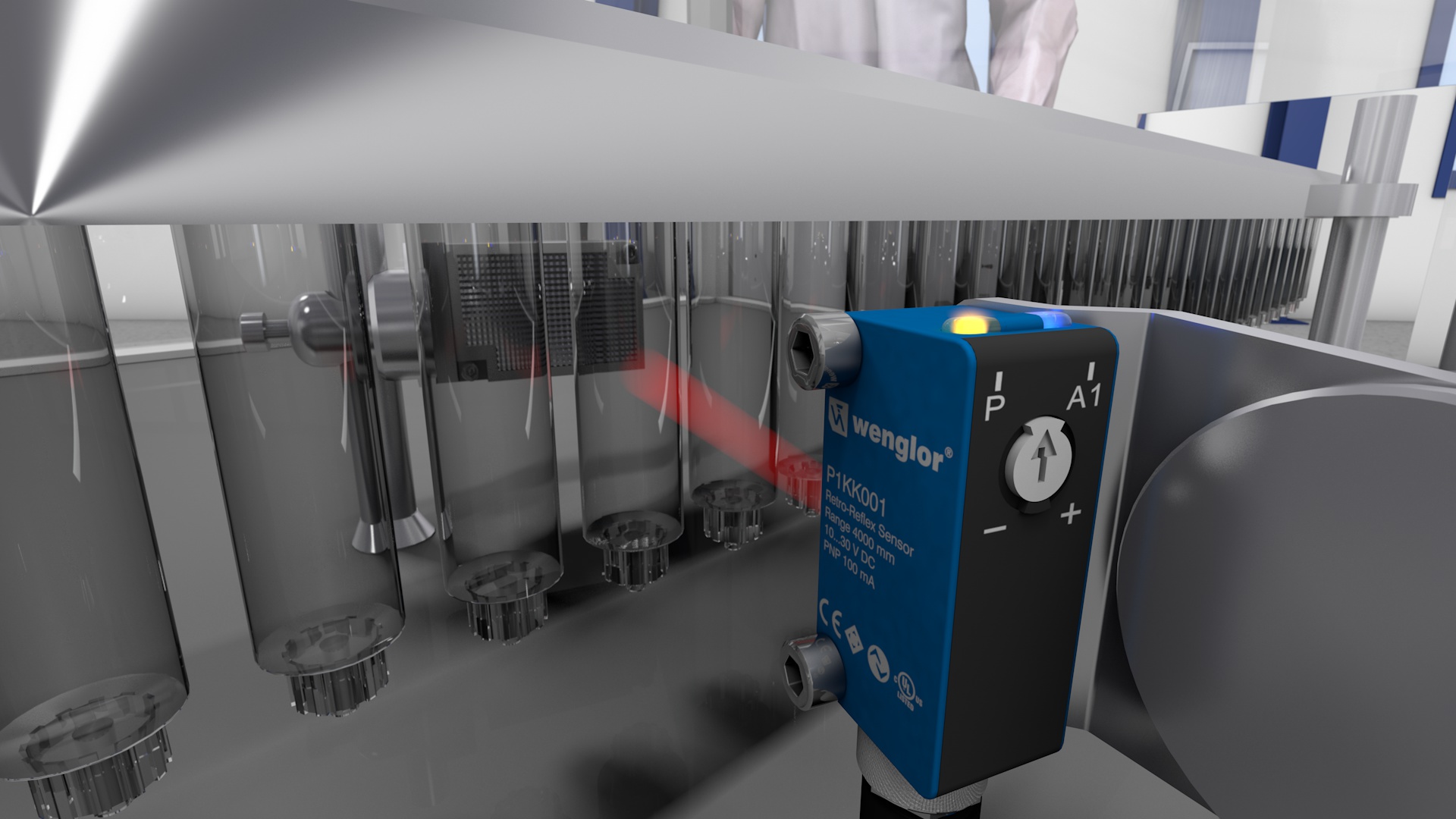
The P1KK001 retro-reflex sensor detects transparent syringes in an automated system.

The so-called blind spot plays a decisive role in such applications. It describes the area directly in front of the sensor optics in which no clear detection is possible. If the object (with a reflex sensor) or the reflector (with a retro-reflex sensor) is very close in front of the emitter, the reflected light beam no longer hits the receiver due to the triangulation angle being too small. In practice, this often leads to incorrect switching or unnoticed parts in the production process.

The challenge: detection in confined spaces

In modern production lines, there is often hardly any space left for the installation of additional sensors. Nevertheless, components must be detected precisely in order to control processes reliably or avoid rejects. Classic reflex sensors or retro-reflex sensors with two-lens optics require a certain distance for the reflected light beam to hit the receiver reliably. If the object or reflector is too close, it falls into the blind spot and is not detected.

This was exactly the situation in this application: a very short detection distance, metal and partially reflective surfaces and little space for installation. What was needed was a sensor solution that would work reliably, even if there were only a few millimetres between the object and the sensor.

The solution: P1KK retro-reflex sensor with single-lens optics

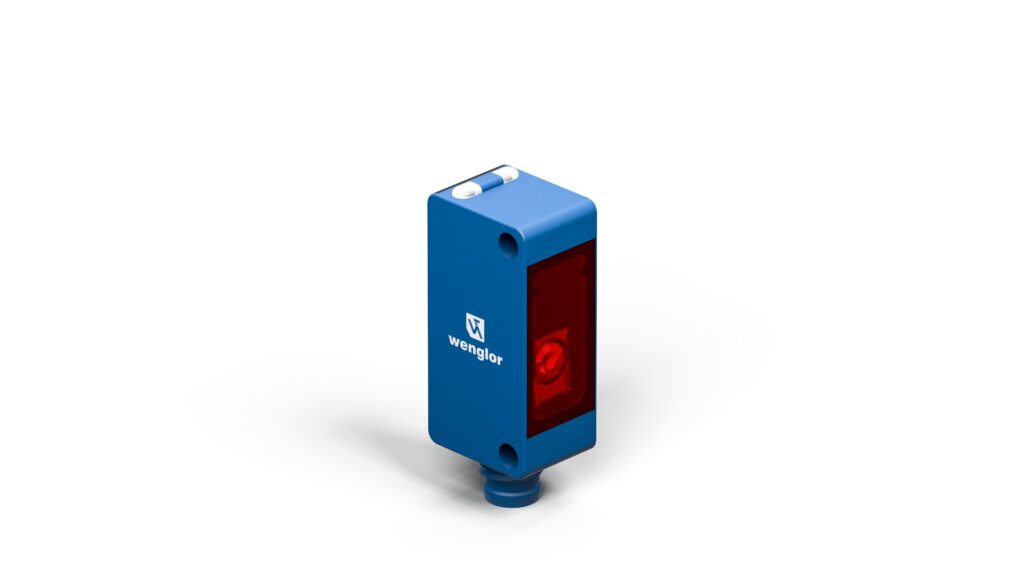
wenglor retro-reflex sensor P1KK001 with single-lens optics for detecting transparent objects such as glass, films and PET bottles at a minimum distance.
The P1KK001 retro-reflex sensor reliably detects transparent materials such as glass and films.

The P1KK retro-reflex sensor from wenglor offers the right solution for these requirements. Its design with single-lens optics ensures that the emitter and receiver beams are guided through the same lens, allowing the reflector to be placed very close in front of the emitter. This means there is no dead zone in front of the sensor front and objects can be reliably detected even at distances of zero to forty millimetres.

In addition to precise light guidance, the P1KK offers an integrated polarization filter that suppresses interfering reflections. Even very shiny, polished or chrome-plated surfaces do not affect detection. Its compact format also makes it easier to integrate into cramped machine layouts or for retrofitting.

The sensor parameters can be digitally adjusted and diagnostic data monitored in real time via IO-Link. This saves time during initial start-up and ensures greater transparency during operation.


Why this solution is convincing

The P1KK offers high process reliability and flexibility, especially where transparent materials need to be reliably detected at close range.

Advantages at a glance:

  • Reliable detection of transparent and reflective objects
  • Minimized blind spot thanks to optimized single-lens optics
  • Compact format for confined machine layouts
  • IO-Link for digital parameterization and diagnostics
  • High switching frequency for fast production processes

This makes the P1KK ideal for applications such as:

  • Fill level and presence check in packaging systems
  • Detection of transparent films and jars in filling lines
  • Position detection of PET containers on conveyor lines

Conclusion

Wherever sensors have to work directly in front of the object, the P1KK shows its strengths. It reliably detects objects, even if the available distance is minimal. Its special single-lens optics eliminate the blind spot, ensuring stable and precise detection. In combination with its compact design and high process reliability, the P1KK retro-reflex sensor offers a powerful solution for applications where every millimeter counts.