
Why is there no repair option for the P3PCxxx product?
In this article, we transparently explain the technical background and show why replacing the P3PCxxx laser distance sensor is the most sensible solution in the event of service.

In this article, we transparently explain the technical background and show why replacing the P3PCxxx laser distance sensor is the most sensible solution in the event of service.
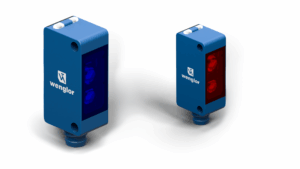
For the reliable detection of brass waves between 4 and 32 mm, wenglor offers compact reflex sensors with blue light, laser or red light. Precise, contactless and flexibly parameterizable – ideal for highly reflective surfaces and limited installation space.

Tool securing despite minimal installation space? We will be presenting miniature inductive sensors and compact M8 optical probes that reliably monitor the feed rate in progressive dies – even in angled, narrow installation situations.

Inductive sensor does not reliably detect thin-walled stainless steel pipes? Find out why an optical button with background suppression is the better alternative for small wall thicknesses.

Different types of paper, surfaces and thicknesses push many buttons to their limits. This practical case shows how precise leading edge detection of print products can still be achieved reliably.

Sensors for roller accumulation conveyors from wenglor enable energy-efficient parcel detection on flexible scissor roller conveyors. Mounted between the rollers, they reliably detect packages, reduce the energy consumption of unused segments and ensure a smooth, low-maintenance material flow in shipping and logistics centers.

How can small valve plates made of metal (Ø 25 mm) be reliably distinguished? With the Smart Camera B60, wenglor enables reliable variant and side control directly in the pick-and-place process. Integrated image processing recognizes patterns, contours, and surface features in real time – even with reflective metal surfaces. In this way, each valve plate in the compressor is clearly identified and correctly positioned – for maximum process and quality reliability in compressor production.

With 2D/3D laser sensors or punctual triangulation sensors, pipe diameters can also be reliably measured while driving. Robust, non-contact systems detect even rough surfaces and document precise expansions.
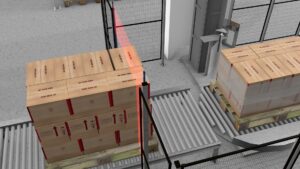
Customer question: How do you recognize parts on a conveyor belt in front of a robot? Measuring light curtains reliably monitor entire conveyor belt areas.

Inductive sensors can be used to detect steel and stainless steel sheet metal strips reliably, contactlessly and reliably. Correction factor 1 sensors ensure identical sensing distances for different metals.

Which sensors are suitable for wet or damp production environments? Learn why IP69K, stainless steel housing, glass optics, and chemical-resistant materials are critical to longevity.

Operating a 2D/3D profile sensor without an external evaluation unit saves space and reduces the integration effort. The article shows how profile sensors of the MLSL and MLWL series are put into operation in the Smart mode “Smart weCat3D” – from firmware testing to connection to uniVision 2 for efficient 2D/3D profile measurement.
How can a concealed bead be detected during the ongoing process and transferred directly to the PLC? Profile sensors provide precise geometry values in real time.

In practice, customer-specific sensor variants often raise questions about the appropriate documentation. The article explains why a separate operating manual is not required for the OPT1543S01 and OPT1543S02 variants, what content is covered by the existing OPT1543 documentation and how the variants differ specifically in terms of delivery status and default settings.

A customer in the field of image processing was faced

2D/3D profile sensors enable the precise detection of scratches, dents and other irregularities on large metal surfaces – even in the presence of movement and reflective materials. They deliver micrometer-precise measurements, cover wide areas and ensure reliable quality control in industrial production.

The direction of a height or position jump can be reliably determined based on the change in sign during differential measurements. The article shows how two correctly referenced and aligned P3PC sensors can detect even small steps and reliably derive the direction of movement of the test object.

With smart cameras such as weQube+ or B60, QR code labels can be automatically checked for presence, position and content match – quickly, reliably and directly integrated into the production process.

Firmware updates are crucial for stable operation of MLSL and MLWL profile sensors. The article shows step by step how to check, update and correctly update the firmware of your weCat3D sensors to version 2.3.0 or higher – including notes on linearization tables, update processes and safety instructions for reliable operation with uniVision 3.
